

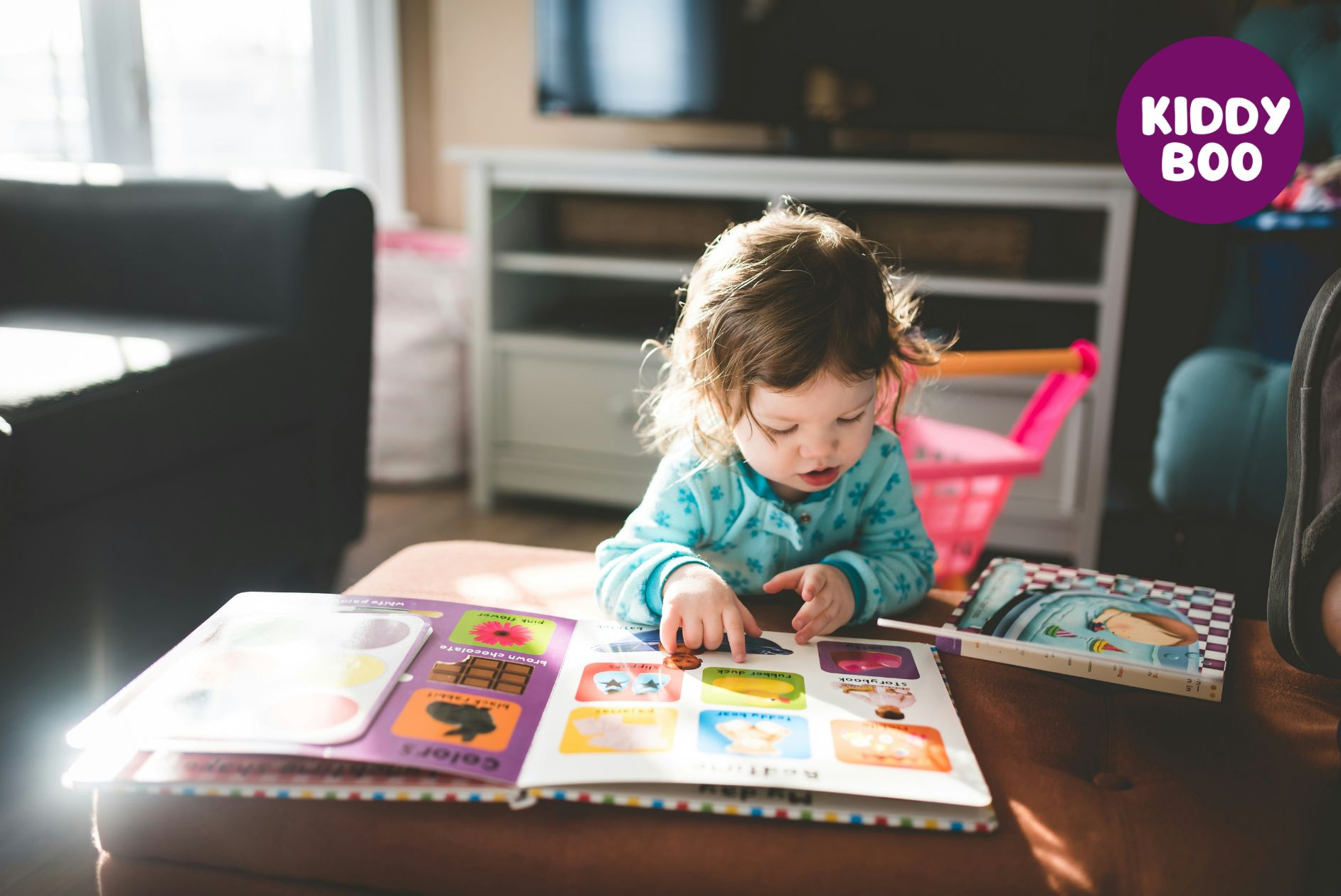
Early childhood learning is entering a new phase. Educational products for young children are becoming calmer and more intuitive. This is particularly clear in interactive children’s books, where early literacy is supported without replacing traditional reading.
For young children, conversation is part of the learning process. They talk through activities, ask questions out loud, repeat instructions, and comment on what they see as they read or play. Interfaces based on menus and visual prompts often don’t fit how young children explore, making learning feel less natural. Voice interaction, by contrast, mirrors how children naturally engage with stories and activities.
Years of observing how children interact with books and activities helped the founders of KiddyBoo Books, a Canadian educational technology startup that blends printed children’s books with AI-powered interactivity, Grigory Lyubarskiy and Natalia Lyubarskaya, recognize this gap.
“For young children, talking is how thinking happens,” note Grigory and Natalia. “They don’t separate learning from speaking. When a book can respond to a child’s voice, it feels less like technology and more like a natural extension of the reading experience.”
This insight shaped the direction of KiddyBoo Books: to create interactive children’s books where voice guidance supports the reading experience without replacing it, allowing the physical book to remain at the center of learning while technology quietly adapts to the child.
Rethinking the Role of Technology for Young Learners
As AI becomes more capable, expectations around its role in children’s products are changing. Technology is now expected to stay in the background, supporting learning without competing for a child’s attention.
Parents and educators are more aware of screen time, attention span, and overstimulation. As a result, preference is moving toward solutions that add guidance only when it is needed, without competing for a child’s focus. In interactive books, this often takes the form of voice-based assistance activated through simple interactions, allowing children to remain engaged with the physical book itself.
“We see a clear shift in what parents are comfortable with,” adds Natalia Lyubarskaya. “They don’t want technology competing for attention. They want it to support learning quietly, without pulling children away from the physical world.”
In this approach, technology supports the reading experience without changing its core. The book remains familiar, with responsiveness added only when it’s needed.
Following the Child’s Pace
Another clear trend in early childhood learning is moving away from rigid, step-by-step interaction. Young children rarely complete activities from start to finish in a straight line. They pause, repeat favorite tasks, skip ahead, or return to earlier pages.
Learning tools are designed to reflect this pattern. Voice guidance fits naturally here: it can repeat explanations, answer questions as they come up, and offer small prompts without interrupting play. Learning follows the child’s pace and develops naturally.
Educational quality is now a basic expectation for interactive products. Many are created together with early childhood educators, so stories and activities support language development, attention, and early problem-solving. Technology is built around this learning structure.
A Book-First Approach to Interactive Learning
Interactive formats extend physical books instead of replacing them. Hybrid approaches combine printed materials with light digital interaction, allowing children to keep the tactile and imaginative experience of reading while receiving additional guidance when it’s helpful.
These formats are often introduced through trusted environments such as preschools, learning centers, bookstores, and community programs. In these settings, parents and educators can see how children engage with books in real-life situations, which helps build confidence in new learning formats.
KiddyBoo Books was developed in response to these shifts. The company creates interactive activity books for children aged 2–6, supported by a voice-based assistant that keeps the physical book at the center of the experience. With simple QR-code activation, the assistant narrates stories, explains activities, and responds to children’s questions while they remain focused on the page.
“Physical books create a sense of focus that’s hard to replicate digitally,” says Grigory Lyubarskiy. “Our goal was never to replace that, but to gently extend it, so the book remains the center of the experience.”
At the core of KiddyBoo’s vision is the idea that children don’t need screens to stay curious and engaged. Learning can feel like play, with technology staying in the background and helping every child access tools that support development and discovery. Developed together with early childhood educators and refined through partnerships with learning centers and community organizations, KiddyBoo fits naturally into a growing segment of children’s publishing where physical books and voice-based interaction work side by side.
In the Canadian market, this approach feels particularly timely, reflecting a growing preference for early learning experiences that support curiosity without relying on screens.